


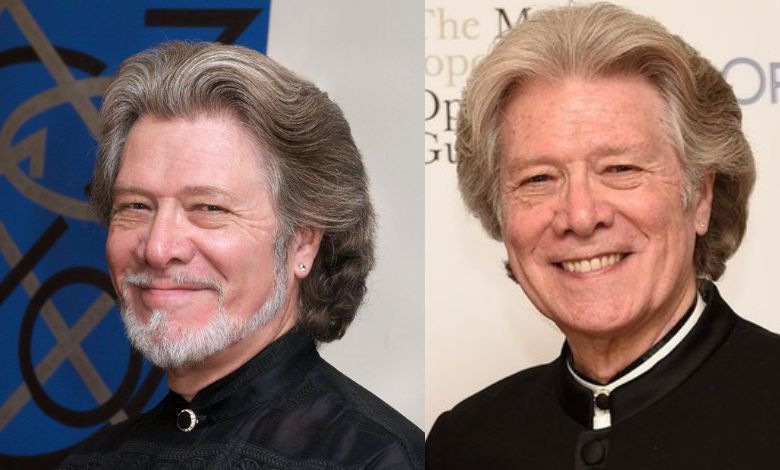
Samuel Ramey is an American operatic bass known for combining a powerful lower register with the vocal agility required by Baroque and bel canto music. His repertoire has included works by Handel, Mozart, Rossini, Verdi, Berlioz, Boito, and other major composers.
Samuel Ramey has performed at leading venues including the Metropolitan Opera, Royal Opera House, La Scala, Vienna State Opera, and Paris Opera. His extensive recording career has earned him three Grammy Awards and helped preserve many of his most important roles.
Profile Summary
| Field | Details |
|---|---|
| Full name | Samuel Edward Ramey |
| Date of birth | March 28, 1942 |
| Age | 84 as of July 2026 |
| Birthplace | Colby, Kansas |
| Nationality | American |
| Profession | Opera singer and educator |
| Voice type | Bass |
| College | Wichita State University |
| Degree | Bachelor of Music in performance, 1968 |
| Professional debut | New York City Opera, 1973 |
| Metropolitan Opera debut | 1984 |
| Notable repertoire | Handel, Mozart, Rossini, Verdi, Berlioz, Boito, and Gounod |
| Grammy record | Three wins and 11 nominations |
| Spouse | Lindsey Larsen |
| Children | One son |
Early Life and Background
Samuel Ramey was born in Colby, Kansas, on March 28, 1942. He graduated from Colby High School in 1960 and pursued music at the college level.
Samuel Ramey initially attended Kansas State University, where he was a member of the Kappa Sigma fraternity. He later continued his studies at Wichita State University under voice teacher Arthur Newman.
While developing as a singer, Ramey participated in programs connected with Central City Opera and Santa Fe Opera. In 1963, he appeared in the chorus of Don Giovanni at Central City Opera.
Samuel Ramey graduated from Wichita State in 1968 with a Bachelor of Music in performance. He subsequently moved to New York, where he worked outside the theater while pursuing professional singing opportunities.
Career and Professional Journey
New York City Opera
Ramey made his professional debut with New York City Opera in March 1973, singing Zuniga in Georges Bizet’s Carmen. He soon assumed more substantial bass roles with the company.
His early repertoire included demonic characters previously associated with American bass Norman Treigle. These roles included Méphistophélès in Gounod’s Faust and the title character in Boito’s Mefistofele.
Ramey’s technical flexibility allowed him to move between several operatic traditions. He could perform rapid, ornamented music by Handel and Rossini while also meeting the heavier vocal demands of Verdi and other Romantic composers.
Also Read: Joy Davidman Biography: Writing Career, C. S. Lewis, Books, and Children
Metropolitan Opera Debut
Samuel Ramey made his Metropolitan Opera debut in January 1984 as Argante in Handel’s Rinaldo. He became a regular performer at the company, appearing in works from the Baroque, Classical, bel canto, and Romantic repertoires.
His Mozart roles included Figaro in The Marriage of Figaro and both Don Giovanni and Leporello in Don Giovanni. His Rossini repertoire included Mustafà in L’italiana in Algeri, Assur in Semiramide, and roles in The Barber of Seville, Il turco in Italia, and La gazza ladra.
Ramey also performed major Verdi characters, including the title role in Attila, Banco in Macbeth, and King Philip II in Don Carlo. His work in less frequently staged operas contributed to renewed attention for several bass-centered works.
International Opera Career
Outside the United States, Ramey appeared at the Royal Opera House in London, Teatro alla Scala in Milan, Vienna State Opera, Paris Opera, and major companies in Berlin and Hamburg.
His festival appearances included Glyndebourne, Salzburg, Aix-en-Provence, and the Rossini Opera Festival in Pesaro. He also performed with the Lyric Opera of Chicago, San Francisco Opera, and Teatro Colón in Buenos Aires.
At the height of his career, Ramey maintained a demanding international schedule that included opera productions, concerts, recitals, and recording sessions. Specific annual performance totals varied by season.
The “Three Devils” Repertoire
Ramey became particularly associated with three demonic bass roles: Boito’s Mefistofele, Gounod’s Méphistophélès, and Berlioz’s Méphistophélès in La damnation de Faust.
He later developed a concert program titled A Date with the Devil, which brought together arias involving supernatural villains and related characters. The program highlighted an important part of his stage identity without representing the full range of his repertoire.
Recording and Screen Work
Ramey has appeared on more than 80 recordings, including complete operas, aria collections, concert works, solo recitals, and crossover projects. His discography includes collaborations with prominent conductors, orchestras, and singers across several major classical labels.
Notable recordings include Mozart’s Le nozze di Figaro, Handel’s Semele, Floyd’s Susannah, Rossini’s Semiramide, and Verdi’s Attila. Many of his stage performances were also recorded for television or home video.
Beyond opera, Ramey provided the voice of the Beast in the animated miniseries Over the Garden Wall in 2014.
Teaching and Later Career
Ramey later expanded his work into music education. He served on the faculty of Roosevelt University’s Chicago College of Performing Arts and subsequently became a distinguished professor of opera at Wichita State University.
His return to Wichita State connected his international performing experience with the institution where he completed his formal music degree. He was named an inaugural member of the university’s College of Fine Arts Hall of Fame in 2015.
Major Achievements and Recognition
Ramey has received three Grammy Awards from 11 nominations. His Grammy-winning recordings were Mozart’s Le nozze di Figaro, Handel’s Semele, and Carlisle Floyd’s Susannah. These were collaborative opera recordings involving their respective casts, conductors, producers, choruses, and orchestras.
His discography has also received recognition including Grand Prix du Disque honors and best-of-the-year citations from classical music publications.
Ramey’s broader contribution lies in the range of repertoire he performed and recorded. His career encompassed technically demanding Rossini roles, Mozart characters, Handel operas, and heavier dramatic works by Verdi, Boito, and Berlioz.
He also helped bring attention to operas that were less frequently staged at the time, including Verdi’s Attila, Rossini’s Maometto II, and Meyerbeer’s Robert le diable.
Also Read: Vincent Sinclair Biography: Fast & Furious Role and Family Background
Frequently Asked Questions
Who is Samuel Ramey?
Samuel Ramey is an American opera singer and educator. He is known for performing bass and bass-baritone repertoire at major opera houses in the United States and Europe.
How old is Samuel Ramey?
Ramey was born on March 28, 1942. He is 84 years old as of July 2026.
What is Samuel Ramey’s voice type?
Ramey is classified as an operatic bass. His repertoire required both a strong lower register and the agility needed for Baroque and bel canto music.
When did Samuel Ramey debut at the Metropolitan Opera?
He made his Metropolitan Opera debut in January 1984. He sang Argante in Handel’s Rinaldo.
How many Grammy Awards has Samuel Ramey won?
Ramey has three Grammy wins from 11 nominations. His winning credits are connected with recordings of Le nozze di Figaro, Semele, and Susannah.
How many Grammy Awards has Samuel Ramey won?
Ramey has three Grammy wins from 11 nominations. His winning credits are connected with recordings of Le nozze di Figaro, Semele, and Susannah.
Conclusion
Samuel Ramey developed from a music student in Kansas into an internationally recognized operatic bass. Beginning with his 1973 New York City Opera debut, he built a career encompassing the Metropolitan Opera and many of Europe’s leading theaters.
His professional legacy includes a broad repertoire, more than 80 recordings, three Grammy Awards, and influential performances in both familiar and rarely staged operas. His later teaching work at Wichita State extended that experience to a new generation of singers.

1 Comment
Pingback: Nicholas Bowling Biography: Christian Commentary, Viral Shorts, and Career