


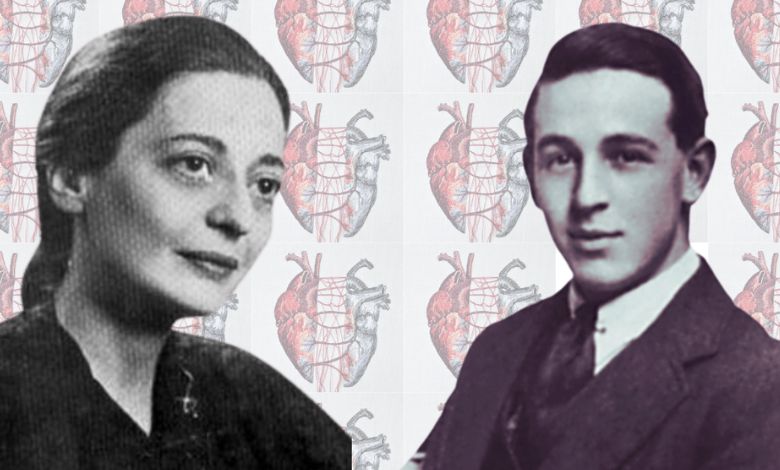
Joy Davidman was an American poet, novelist, critic, editor, and religious writer. Although she is often remembered as the wife of British author C. S. Lewis, she had established an award-winning literary career years before they met.
Joy Davidman won the Yale Series of Younger Poets Competition for Letter to a Comrade and later received the Russell Loines Award for the same collection. Her other major works include the novels Anya and Weeping Bay and the religious study Smoke on the Mountain.
Her relationship with Lewis developed through correspondence, intellectual companionship, and mutual literary criticism. Following Davidman’s death from cancer in 1960, Lewis examined his bereavement in A Grief Observed.
Profile Summary
| Field | Details |
|---|---|
| Full name | Helen Joy Davidman |
| Professional name | Joy Davidman |
| Married name | Joy Davidman Lewis |
| Date of birth | April 18, 1915 |
| Birthplace | New York City, United States |
| Date of death | July 13, 1960 |
| Place of death | Oxford, England |
| Age at death | 45 |
| Nationality | American |
| Professions | Poet, novelist, critic, editor, and religious writer |
| Education | Hunter College; Columbia University |
| Poetry collection | Letter to a Comrade |
| Novels | Anya and Weeping Bay |
| Notable nonfiction | Smoke on the Mountain |
| First husband | William Lindsay Gresham |
| Second husband | C. S. Lewis |
| Children | David and Douglas Gresham |
| Major honors | Yale Series of Younger Poets Competition; Russell Loines Award |
| Birth sign | Aries |
Early Life and Background
Helen Joy Davidman was born on April 18, 1915, in New York City. She grew up in the Bronx in a secular Jewish household.
Her parents were Joseph Davidman and Jeanette Spivack. Both came from Eastern European Jewish family backgrounds. Davidman had a younger brother named Howard.
She demonstrated advanced intellectual and musical ability from childhood. Biographical accounts commonly describe her as a child prodigy with exceptional reading, analytical, and piano skills.
Joy Davidman completed high school at 14 and entered Hunter College. She earned her bachelor’s degree at 19 before completing a master’s degree in English literature at Columbia University in 1935, when she was 20.
Her education prepared her for work in teaching, criticism, and literature. She taught briefly but soon decided to concentrate on writing and editing.
Career and Professional Journey
Early Poetry and Journalism
Davidman began publishing poetry in respected literary periodicals during the 1930s. Her early work developed during the Great Depression and reflected her engagement with political inequality, class, war, and relationships between women and men.
She joined the Communist Party USA in 1938. Her political views influenced portions of her poetry and journalism, placing her within the broader tradition of American proletarian literature.
Davidman worked with The New Masses, a left-wing publication for which she wrote film criticism and later served as a book reviewer and poetry editor. Her reviews were known for their direct and often severe assessments.
Her political commitments changed during the 1940s. She eventually left the Communist Party and moved away from organized Marxist politics.
Letter to a Comrade
Davidman’s first major poetry collection, Letter to a Comrade, was published in 1938. The volume contained both traditional and free verse addressing political conflict, social inequality, personal relationships, and the Spanish Civil War.
Poet Stephen Vincent Benét selected the manuscript for the Yale Series of Younger Poets Competition. The honor gave Davidman national literary recognition while she was still in her early twenties.
In 1939, Letter to a Comrade received the Russell Loines Award for Poetry. The second award confirmed her standing as a promising American poet independently of her later association with C. S. Lewis.
Screenwriting in Hollywood
In 1939, Metro-Goldwyn-Mayer hired Davidman to work in Hollywood. She reportedly wrote several screenplays during a six-month period, although none entered production.
Joy Davidman returned to New York after her contract ended. Her time in Hollywood informed her later film criticism, but it did not lead to a sustained screenwriting career.
Anya
Joy Davidman published her first novel, Anya, in 1940. The book expanded her work from poetry and criticism into longer fiction.
Although Anya did not achieve the lasting public recognition of her poetry awards or later religious writing, it demonstrated her range as an author. It also established her as a novelist before her marriage to either William Lindsay Gresham or C. S. Lewis.
Marriage to William Lindsay Gresham
Davidman married writer William Lindsay Gresham on August 24, 1942. The two had met through shared literary and political interests.
Gresham later became widely known for his 1946 novel Nightmare Alley, a dark examination of carnival culture, deception, and psychological manipulation.
Davidman and Gresham had two sons. David Lindsay Gresham was born in 1944, followed by Douglas Howard Gresham in 1945.
During the marriage, Davidman continued writing while caring for their children. Financial pressure, Gresham’s alcohol misuse, and his relationships outside the marriage contributed to serious difficulties between them.
The couple became estranged and eventually divorced in 1954. Davidman later moved to England with their sons.
Also Read: Hailey Brown Biography: Age, Farm Life, Instagram, and Social Media Career
Weeping Bay
Davidman’s second novel, Weeping Bay, was published in 1950. The book examined moral conflict, family relationships, and community life.
The novel appeared during a period of significant personal and religious change for its author. Davidman was reconsidering both the political ideas of her early adulthood and the atheism in which she had been raised.
Although Weeping Bay is less widely read today than works associated with C. S. Lewis, it remains an important part of her independent literary record.
Conversion to Christianity
Joy Davidman described herself as an atheist during her early life. Her religious views began changing during a crisis in her marriage.
She initially explored different religious traditions, including Judaism. She eventually converted to Christianity and joined a Presbyterian congregation with her family in 1948.
The writings of C. S. Lewis contributed to her developing understanding of Christian belief. His accessible approach to theology and ethics gave her an intellectual framework for examining faith.
Davidman’s conversion did not end her habit of critical inquiry. Her later writing approached religious subjects through argument, literary analysis, humor, and contemporary social observation.
Correspondence with C. S. Lewis
Joy Davidman began corresponding with C. S. Lewis in 1950. Their letters addressed literature, religion, criticism, and personal experience.
She traveled to England in 1952 and met Lewis in person. Their early relationship was primarily intellectual, built around conversation and shared literary interests.
After returning to the United States, Davidman’s marriage to Gresham continued to deteriorate. She moved to England with David and Douglas in 1953 and made the relocation permanent.
Lewis helped Davidman and her sons during periods of financial difficulty. He assisted with school expenses and helped them find housing near Oxford.
Smoke on the Mountain
Davidman published Smoke on the Mountain: An Interpretation of the Ten Commandments in Terms of Today in the United States in 1954. It remains her best-known work of religious nonfiction.
The book examines the Ten Commandments in relation to modern ethical, economic, and social questions. Davidman treated the commandments as a connected moral framework rather than a simple list of isolated rules.
Lewis discussed the manuscript with Davidman and wrote its preface. The book was published in Britain the following year.
The collaboration illustrated the intellectual exchange between them. Lewis influenced Davidman’s theological approach, while she also served as a critic and contributor to his later writing.
Marriage to C. S. Lewis
Davidman faced immigration difficulties after settling in Britain. To allow her and her sons to remain in the country, Lewis agreed to a civil marriage.
They married at an Oxford register office on April 23, 1956. At that stage, the arrangement was presented as one of friendship and legal practicality, and the two continued living separately.
Later that year, Davidman fractured her leg and was diagnosed with metastatic cancer involving her bones. The seriousness of her illness changed the nature of her relationship with Lewis, who acknowledged that he had fallen in love with her.
The couple sought a Christian marriage ceremony. Anglican priest Peter Bide performed it at Davidman’s hospital bedside on March 21, 1957.
After leaving the hospital, Davidman lived with Lewis at the Kilns, his home near Oxford. Her health temporarily improved following treatment, allowing the couple to travel together.
Literary Collaboration with Lewis
Davidman became an important reader and critic of Lewis’s manuscripts. She offered comments on structure, characterization, language, and argument.
Her influence is particularly associated with Till We Have Faces, Lewis’s retelling of the Cupid and Psyche myth. Scholars have also identified her contribution to the ideas developed in The Four Loves and Reflections on the Psalms.
The extent of her involvement should not be overstated as co-authorship. The surviving evidence instead presents her as a serious intellectual collaborator whose criticism affected Lewis’s thinking and revisions.
Lewis likewise helped sharpen Davidman’s religious writing, especially Smoke on the Mountain. Their literary relationship was therefore mutual rather than a simple case of a famous writer advising a lesser-known spouse.
Illness and Death
Joy Davidman experienced a period of remission following surgery and radiation treatment. She and Lewis traveled within Britain and Ireland and later visited Greece, fulfilling one of her long-held ambitions.
Medical examinations in 1959 showed that her cancer had returned. Her condition worsened during the following year.
Joy Davidman died in Oxford on July 13, 1960. She was 45. At her request, she was cremated, and her ashes were scattered over a rose garden at the crematorium.
Lewis continued caring for her sons after her death. Douglas Gresham later became a producer and a prominent representative of the C. S. Lewis estate.
Major Achievements and Recognition
Davidman’s selection for the Yale Series of Younger Poets Competition in 1938 was the first major honor of her career. The award recognized Letter to a Comrade before she became associated publicly with Lewis.
The collection received further recognition through the 1939 Russell Loines Award for Poetry. Together, the honors established her as a significant young poet.
Her publications crossed several genres:
- Letter to a Comrade — poetry
- Anya — novel
- Weeping Bay — novel
- Smoke on the Mountain — religious and ethical commentary
Joy Davidman also worked in criticism, journalism, editing, and screenwriting. This range challenges the narrow description of her as merely C. S. Lewis’s wife.
Posthumous books have expanded access to her writing. Out of My Bone collects her letters, while A Naked Tree brings together love sonnets addressed to Lewis and other poems.
Modern scholarship has increasingly examined Joy Davidman’s Jewish background, political history, conversion, poetry, fiction, and influence on Lewis. This reassessment has helped restore her independent place in twentieth-century literary history.
A Grief Observed
After Davidman’s death, Lewis recorded his grief in a series of notebooks. The material was published in 1961 as A Grief Observed under the pseudonym N. W. Clerk.
The book examines bereavement, anger, doubt, memory, and religious faith. Lewis did not present grief as a simple progression toward comfort; he documented the instability of his thoughts after losing his wife.
A Grief Observed became one of Lewis’s most personal and widely read books. However, it reflects his experience of Davidman’s death rather than providing a complete biography of her life.
Understanding Davidman requires attention to her own poetry, novels, letters, and religious writing, not only to the work Lewis produced after her death.
Shadowlands and Cultural Legacy
The relationship between Joy Davidman and Lewis became the subject of William Nicholson’s Shadowlands. The story was adapted for television and the stage before becoming a major film in 1993.
The film starred Debra Winger as Davidman and Anthony Hopkins as Lewis. Winger received an Academy Award nomination for her performance.
Shadowlands introduced Davidman to a broad international audience, but it is a dramatization rather than a documentary. It alters aspects of chronology, characterization, and family history for narrative purposes.
Historical biographies, letters, and archival material provide a more complete account of Davidman as a writer, political thinker, mother, convert, and literary collaborator.
Also Read: Jess Ryan Biography: Age, TikTok Career, Boyfriend, and Family
Frequently Asked Questions
Who was Joy Davidman?
Joy Davidman was an American poet, novelist, critic, editor, and religious writer. She won major poetry awards before becoming the second wife and intellectual collaborator of C. S. Lewis.
What books did Joy Davidman write?
Her major books include the poetry collection Letter to a Comrade, the novels Anya and Weeping Bay, and the religious study Smoke on the Mountain. Collections of her letters and poetry were published after her death.
How did Joy Davidman meet C. S. Lewis?
Davidman began corresponding with Lewis in 1950 about literature and Christianity. They met in England in 1952, developed a close intellectual friendship, and entered a civil marriage in 1956.
Did Joy Davidman have children?
Yes. She had two sons, David and Douglas Gresham, with her first husband, William Lindsay Gresham. Lewis helped raise both boys after Davidman moved to England and continued caring for them following her death.
How did Joy Davidman die?
Davidman died from metastatic cancer in Oxford on July 13, 1960. She was 45 years old.
Conclusion
Joy Davidman was an accomplished writer whose career encompassed poetry, novels, criticism, editing, journalism, and religious nonfiction. Her award-winning Letter to a Comrade established her literary reputation well before she met C. S. Lewis.
Her intellectual development included movement from atheism and communist politics toward Christianity. That transition shaped Smoke on the Mountain, her best-known work of religious commentary.
Davidman’s marriages to William Lindsay Gresham and C. S. Lewis formed important parts of her life, but they do not define the full extent of her work. She was a published author, prize-winning poet, mother of two sons, and influential critic of Lewis’s later writing.
Her growing recognition in modern scholarship restores a more balanced view: Joy Davidman was not simply the subject of A Grief Observed or Shadowlands, but a significant twentieth-century writer in her own right.

1 Comment
Pingback: Who Is Samuel Ramey? American Opera Bass and Grammy Winner