


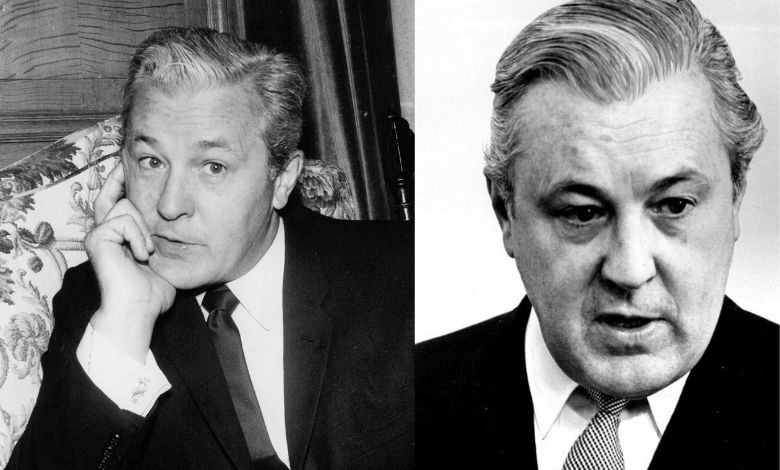
Melvin Belli was an American trial lawyer, author, and prominent figure in twentieth-century personal-injury law. Based in San Francisco, he became known as the “King of Torts” for representing injured plaintiffs and using photographs, anatomical models, medical exhibits, and other visual evidence in court.
Melvin Belli’s clients ranged from private individuals seeking compensation to internationally known entertainers and public figures. His client list included Muhammad Ali, The Rolling Stones, Chuck Berry, Mae West, Lana Turner, Lenny Bruce, and Zsa Zsa Gabor.
His most historically significant criminal case was the 1964 trial of Jack Ruby, who killed Lee Harvey Oswald. Beyond courtroom practice, Belli wrote extensively about trial strategy and civil litigation. His work helped make demonstrative evidence a more established part of American trial advocacy.
Profile Summary
| Profile field | Details |
|---|---|
| Full name | Melvin Mouron Belli |
| Known as | Melvin Belli |
| Nickname | “King of Torts” |
| Date of birth | July 29, 1907 |
| Birthplace | Sonora, California, United States |
| Date of death | July 9, 1996 |
| Age at death | 88 |
| Place of death | San Francisco, California |
| Nationality | American |
| Profession | Trial lawyer and author |
| Primary practice area | Personal-injury and tort litigation |
| Education | University of California, Berkeley; UC Berkeley School of Law |
| Year admitted to the California Bar | 1933 |
| Best-known criminal case | Defense of Jack Ruby |
| Notable clients | Muhammad Ali, The Rolling Stones, Chuck Berry, Mae West, Lana Turner, Lenny Bruce, and Zsa Zsa Gabor |
| Notable books | Modern Trials, Dallas Justice, and My Life on Trial |
| Known for | Demonstrative evidence and plaintiff-focused trial advocacy |
Early Life and Background
Childhood in California
Melvin Mouron Belli was born on July 29, 1907, in Sonora, California. He was the son of Caesar A. Belli and Leonie Mouron Belli.
He later spent part of his youth in Stockton, California. Publicly documented information about his childhood is more limited than the available record of his legal career.
Melvin Belli’s maternal grandmother, Anna Mouron, has been described in historical accounts as one of California’s earliest female pharmacists.
University Education
Melvin Belli attended the University of California, Berkeley, before studying law at the institution now known as UC Berkeley School of Law.
He completed his legal education in 1933 and was admitted to the California Bar later that year. His training marked the beginning of a legal career that continued for more than six decades.
Depression-Era Research
After law school, Belli participated in federal research examining the experiences of unemployed and transient people during the Great Depression.
Biographical accounts state that he traveled among itinerant workers while collecting information about poverty, displacement, and living conditions. This work gave him direct exposure to communities with limited economic and political influence.
Career and Professional Journey
Beginning a Legal Practice
Melvin Belli’s early legal work included matters involving prisoners and criminal defendants. He later concentrated primarily on civil lawsuits involving personal injury, defective products, professional negligence, and financial damages.
A tort is a civil wrong that causes injury or loss for which the affected person may seek compensation. Belli built his reputation by representing plaintiffs rather than insurance companies or large corporate defendants.
His practice was based in San Francisco, where he became one of the most recognizable courtroom lawyers in the United States.
Development of Demonstrative Evidence
One of Melvin Belli’s most important contributions was his extensive use of demonstrative evidence. Instead of relying entirely on spoken testimony and written records, he used physical objects, photographs, medical illustrations, models, and visual displays.
In an early personal-injury case involving an injured cable-car worker, Belli reportedly used a model of an intersection and parts of the cable-car system to explain the accident to jurors.
He later applied similar techniques in medical-injury cases. His courtroom presentations included skeletons, X-rays, prosthetic devices, photographs, and anatomical models.
These methods were considered unusually dramatic by some lawyers of his era. Over time, however, visual presentations and expert demonstrations became common tools in civil litigation.
Becoming the “King of Torts”
Melvin Belli became widely known as the “King of Torts” because of his success in personal-injury litigation and his public courtroom style.
He argued that compensation should reflect more than immediate medical expenses. His cases emphasized pain, permanent disability, future treatment costs, reduced earning ability, and the broader effect of an injury on a person’s daily life.
His approach contributed to the development of larger personal-injury awards during the mid-twentieth century. The nickname also reflected his forceful arguments, distinctive appearance, frequent media exposure, and ability to explain complex cases to general audiences.
Also Read: Who Is Joshua Phillips? Age, Murder Case, Trial, and Sentence Review
Jack Ruby Trial
Melvin Belli’s best-known criminal case was his representation of Jack Ruby, the Dallas nightclub operator who shot and killed Lee Harvey Oswald on November 24, 1963.
Oswald had been accused of assassinating President John F. Kennedy two days earlier.
At Ruby’s 1964 trial, Belli pursued a defense based on Ruby’s mental condition. He argued that Ruby was not legally responsible for the shooting because of a psychological or neurological impairment.
The defense was unsuccessful. A jury convicted Ruby of murder with malice and sentenced him to death.
Melvin Belli did not lead Ruby’s later appeal. The conviction and death sentence were overturned in 1966, partly because the original trial court had refused to move the proceedings away from Dallas. Ruby died before a second trial could take place.
The case brought Belli international attention, although criminal law represented only a limited part of his broader legal practice.
Celebrity Clients
Melvin Belli represented numerous actors, musicians, athletes, and public figures. His clients included Muhammad Ali, The Rolling Stones, Chuck Berry, Mae West, Tony Curtis, Lenny Bruce, Zsa Zsa Gabor, and Lana Turner.
Other reported clients included Errol Flynn, Jim and Tammy Faye Bakker, and political activist Mario Savio.
The type and duration of Belli’s work varied by client. Not every representation involved a trial or a publicly documented court case.
His association with famous clients led to the label “celebrity lawyer.” However, much of his practice involved private individuals, consumer claims, medical disputes, product-liability lawsuits, and cases against insurers or corporations.
The Rolling Stones and Media Appearances
Melvin Belli became associated with The Rolling Stones during preparations for the band’s 1969 Altamont concert in California.
He later appeared as himself in Gimme Shelter, the documentary examining the Stones’ American tour and the events surrounding the concert.
Melvin Belli also appeared in popular entertainment. He played the character Gorgan in the 1968 Star Trek episode “And the Children Shall Lead.”
These appearances were not central to his legal career, but they reflected his visibility beyond the courtroom.
Author and Legal Commentator
Belli was a prolific writer who authored or co-authored numerous books about law, courtroom practice, and his professional experiences.
His most influential legal work was the multivolume series Modern Trials. It examined courtroom preparation, demonstrative evidence, damages, expert testimony, and methods of presenting complicated information to juries.
Following the Jack Ruby trial, Belli and journalist Maurice C. Carroll published Dallas Justice: The Real Story of Jack Ruby and His Trial. The book presented Belli’s account of the case and his defense strategy.
He also wrote My Life on Trial, an autobiography covering his career, major cases, and public image. As an autobiographical work, it reflected Belli’s own interpretation of events.
Also Read: Who Is Jorge D’Alessio? Matute Singer, Producer, Parents, and Career
Major Achievements and Recognition
Influence on Trial Advocacy
Belli’s principal professional achievement was his influence on courtroom presentation.
He helped establish the idea that juries could better understand technical and medical evidence when lawyers presented it visually and connected it to the everyday consequences of an injury.
Photographs, medical models, accident reconstructions, and expert demonstrations are now common in litigation. Although Belli did not invent every technique he used, he became one of their most prominent advocates.
Advancement of Plaintiff Litigation
Belli played an important role in expanding plaintiff-focused tort litigation.
His cases challenged insurers, manufacturers, employers, and other powerful defendants on behalf of individuals seeking compensation for injuries and financial losses.
His work contributed to broader legal discussions about corporate responsibility, product safety, medical negligence, consumer rights, and appropriate compensation for serious harm.
Legal Writing and Education
Through Modern Trials and his other publications, Belli shared practical methods for presenting evidence, calculating damages, questioning experts, and communicating with juries.
His writing influenced generations of trial lawyers and helped document the growth of demonstrative evidence in American courts.
He also gave lectures and participated in professional programs related to trial practice.
Professional Reputation
Belli’s reputation within the legal profession was complex.
Supporters viewed him as a creative and effective advocate who made courts more responsive to the real-life effects of injury. Critics argued that his dramatic presentations and media activity sometimes made trials appear overly theatrical.
Both perspectives form part of his historical legacy. His methods were controversial during parts of his career, but many later became standard courtroom practices.
His later years also included financial and professional difficulties. His law practice entered bankruptcy proceedings, and disputes with former colleagues affected the final period of his career.
Death and Legal Legacy
Melvin Belli died at his San Francisco home on July 9, 1996. He was 88 years old and died less than three weeks before his 89th birthday.
His legacy rests primarily on his use of demonstrative evidence, his role in the development of modern personal-injury litigation, and his extensive writing about trial practice.
His famous clients made him a public figure, but his lasting importance lies in how he influenced the presentation of injuries, damages, and technical evidence to juries.
Frequently Asked Questions
Why was Melvin Belli called the “King of Torts”?
Melvin Belli received the nickname because of his prominence in personal-injury and civil-damages litigation. He became known for obtaining substantial compensation for clients and using photographs, models, medical exhibits, and other visual evidence to explain injuries to juries.
Did Melvin Belli represent Jack Ruby?
Yes. Belli was a leading defense lawyer during Jack Ruby’s 1964 murder trial. He presented a defense based on Ruby’s mental condition, but the jury convicted Ruby and sentenced him to death. Belli did not lead the later appeal that overturned the conviction.
Which celebrities did Melvin Belli represent?
Belli represented Muhammad Ali, The Rolling Stones, Chuck Berry, Mae West, Tony Curtis, Lenny Bruce, Zsa Zsa Gabor, Lana Turner, and several other public figures. The nature of his legal work varied, and not every representation resulted in a public trial.
What books did Melvin Belli write?
His best-known works include the multivolume Modern Trials, Dallas Justice: The Real Story of Jack Ruby and His Trial, and My Life on Trial. His writing focused on trial strategy, demonstrative evidence, damages, legal practice, and his own professional experiences.
What was Melvin Belli’s most important contribution to law?
His most enduring contribution was the promotion of demonstrative courtroom evidence. He used models, photographs, anatomical displays, mechanical objects, and expert testimony to make complicated accidents and injuries easier for juries to understand.
Conclusion
Melvin Belli was one of the most visible American trial lawyers of the twentieth century. Born in Sonora, California, in 1907, he completed his legal education at UC Berkeley and began practicing law in 1933.
His defense of Jack Ruby became his most famous criminal case, while clients such as Muhammad Ali, The Rolling Stones, Chuck Berry, and Mae West strengthened his reputation as a celebrity attorney.
His legal importance, however, extended beyond famous clients. Belli’s use of photographs, physical models, medical exhibits, and expert demonstrations helped reshape courtroom advocacy.
Through his cases, lectures, and books such as Modern Trials, he influenced how lawyers present evidence and explain damages. Despite controversy surrounding his theatrical style and difficulties late in his career, his impact on tort litigation and trial practice remains the central element of his legacy.

2 Comments
Pingback: Kyle Martino Biography: MLS Career, TNT Sports, Wife, and Soccer Achievements
Pingback: Dorothea Dix Biography: Age, Career, Reforms, and Lasting Influence