


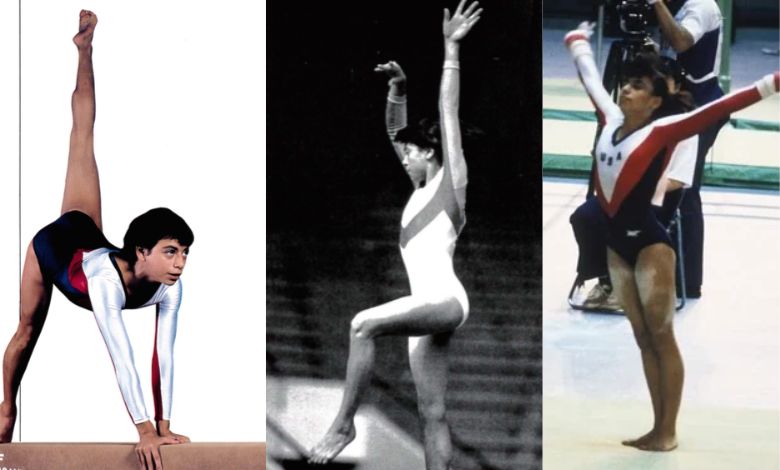
Julissa Gomez was an American artistic gymnast from San Antonio, Texas, remembered as a promising young athlete whose career was cut short by a catastrophic vaulting accident in 1988. She was considered an Olympic hopeful before the injury, which occurred during warmups at the World Sports Fair in Tokyo, Japan.
Her story remains part of gymnastics history because it highlights both her athletic promise and the safety concerns surrounding high-difficulty vaulting in the late 1980s. Gomez died on August 8, 1991, three years after the accident, at age 18.
Profile Summary
| Field | Details |
|---|---|
| Full Name | Julissa D’Anne Gomez |
| Profession | Artistic Gymnast |
| Date of Birth | November 4, 1972 |
| Birth Sign | Scorpio |
| Birthplace | San Antonio, Texas, United States |
| Date of Death | August 8, 1991 |
| Age at Death | 18 years old |
| Place of Death | Houston, Texas, United States |
| Nationality | American |
| Known For | U.S. elite gymnastics career and 1988 vault accident |
| Main Discipline | Women’s Artistic Gymnastics |
| Training Locations | San Antonio, Houston, and later Blue Springs, Missouri |
| Notable Coaches | Béla Károlyi and Al Fong |
| Major Career Context | 1988 U.S. Olympic hopeful |
| Parents | Otilia Gomez and Ramiro Gomez |
| Safety Legacy | Often discussed in connection with vault safety reforms |
Early Life and Background
Julissa D’Anne Gomez was born on November 4, 1972, in San Antonio, Texas. Public biographical profiles list her birth sign as Scorpio and identify her as a gymnast whose life and career became closely tied to the history of vault safety.
Gomez began tumbling at age five and later moved into gymnastics. The Los Angeles Times reported that she trained first in San Antonio before her family moved to Houston, where she trained with Béla Károlyi and later Steve Crouse. Her parents, Otilia and Ramiro Gomez, supported her gymnastics development and traveled to Japan after her accident.
Her early life is best understood through her gymnastics path rather than through private family details. Verified public reporting focuses mainly on her training, competitive promise, family support, and later medical condition.
Also Read: Who Was Ann Pennington? Stage Actress, Dancer, Movies, and Life Story
Career and Professional Journey
Gomez rose quickly through U.S. gymnastics in the mid-1980s. Contemporary reporting described her as a top-ranked American gymnast and Olympic hopeful, indicating that she was viewed as a serious athlete in the national program before the 1988 Olympic selection process.
She trained in Houston with Béla Károlyi, a coach associated with several elite gymnasts. Later, Gomez trained at Great American Gymnastics Express in Blue Springs, Missouri, under coach Al Fong. The move reflected her continued effort to progress toward senior-level competition and Olympic consideration.
On May 5, 1988, Gomez was injured while practicing a vault at the World Sports Fair in Tokyo. The Los Angeles Times reported that she was attempting a round-off entry vault when her foot slipped on the springboard, preventing the necessary lift before impact with the vaulting horse. The accident caused a spinal injury and left her paralyzed.
Following the accident, Gomez was treated in Japan and later returned to Houston. A later Los Angeles Times report stated that she never regained consciousness, remained paralyzed, and required breathing assistance until her death in Houston in August 1991.
Injury, Death, and Safety Context
Gomez’s accident happened during a period when women’s gymnastics was rapidly increasing in difficulty. The vault she attempted was part of a newer generation of round-off entry vaults, often associated with the Yurchenko family of skills. Contemporary reporting quoted Béla Károlyi as saying that gymnastics skills were becoming more difficult and more spectacular during that era.
After Gomez’s injury, her case became part of wider discussions about athlete safety, coaching decisions, vault preparation, and equipment standards. The accident is often remembered in relation to later changes in vault safety, including the use of protective equipment around the springboard for round-off entry vaults and broader attention to the risks of the older vaulting horse.
The traditional vaulting horse was later replaced by the modern vaulting table at elite international competitions. Search records from the International Gymnastics Federation describe the vaulting table’s debut at the 2001 World Championships, while other gymnastics summaries note that the wider, more stable table was introduced as part of efforts to improve safety and performance.
Major Achievements and Recognition
Julissa Gomez is remembered first as an athlete, not only as the subject of a tragic injury. She was a serious U.S. elite gymnast and Olympic hopeful before the accident. The Los Angeles Times described her as a top-ranked American gymnast who was preparing for the Olympic team selection process.
Her career also reflects the dedication required of elite gymnasts at a young age. She trained across multiple cities, worked with nationally known coaches, and pursued a place among the top American gymnasts of her generation.
Her long-term recognition is tied to gymnastics safety. Gomez’s accident is one of the most widely cited serious vaulting injuries in the sport’s modern history and remains a reference point in discussions about risk management, equipment design, and athlete protection.
Also Read: Ximena Miranda Biography: TikTok Star, Age, Husband, Fashion, and Facts
FAQ Section
Who was Julissa Gomez?
Julissa Gomez was an American artistic gymnast from San Antonio, Texas. She was considered an Olympic hopeful before suffering a severe vaulting injury at the 1988 World Sports Fair in Tokyo.
When was Julissa Gomez born?
Julissa Gomez was born on November 4, 1972, in San Antonio, Texas. Her birth sign was Scorpio.
What happened to Julissa Gomez in 1988?
On May 5, 1988, Gomez was injured while warming up for vault at the World Sports Fair in Tokyo. Reporting at the time said her foot slipped on the springboard during a round-off entry vault, leading to a severe spinal injury.
When did Julissa Gomez die?
Julissa Gomez died on August 8, 1991, in Houston, Texas. She was 18 years old and had remained in a coma after the 1988 accident.
Why is Julissa Gomez remembered in gymnastics history?
Julissa Gomez is remembered as a promising U.S. gymnast and Olympic hopeful whose accident became part of major discussions about vault safety, coaching responsibility, and protective equipment in gymnastics.
Conclusion
Julissa Gomez was a talented American artistic gymnast whose career showed major promise before her 1988 vaulting accident. Born in San Antonio on November 4, 1972, she trained in Texas and Missouri and was viewed as a potential contender for the 1988 U.S. Olympic team.
The key verified facts about Gomez include her San Antonio background, training with Béla Károlyi and Al Fong, injury at the 1988 World Sports Fair in Tokyo, death in Houston on August 8, 1991, and lasting connection to gymnastics safety discussions. Her story remains important because it combines athletic ambition, family sacrifice, and the continuing need for safety in elite youth sports.
