


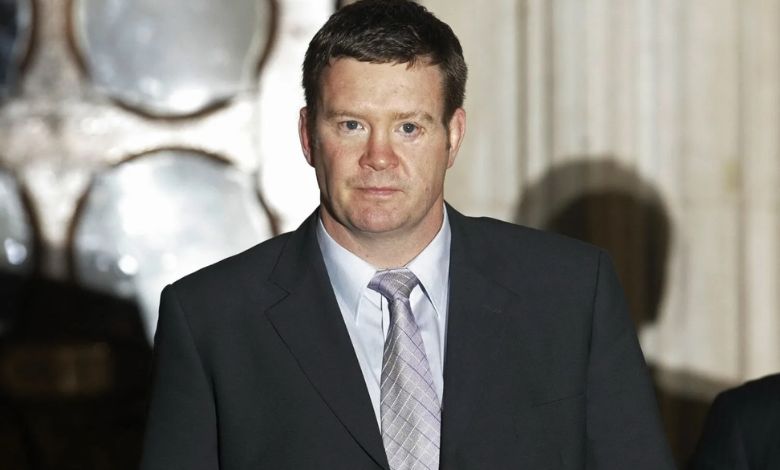
Trevor Rees-Jones is a British former soldier, bodyguard, security professional, and author. He is best known as the only person to survive the car crash in Paris that killed Diana, Princess of Wales, Dodi Fayed, and driver Henri Paul on August 31, 1997.
Trevor Rees-Jones was working as part of Dodi Fayed’s protection team at the time. He suffered severe head, facial, and chest injuries in the collision and underwent extensive surgery and rehabilitation.
Because of his injuries, Rees-Jones has consistently maintained that he has little reliable memory of the crash itself. He later participated in official investigations and published a memoir, The Bodyguard’s Story, describing his security career, the events leading up to the crash, and his recovery.
Profile Summary
| Field | Details |
|---|---|
| Full Name | Trevor Rees-Jones |
| Birth Name | Trevor Rees |
| Reported Date of Birth | March 3, 1968 |
| Reported Birthplace | Rinteln, West Germany |
| Nationality | British |
| Profession | Former soldier, bodyguard, security professional, and author |
| Military Service | British Army |
| Military Unit | 1st Battalion, Parachute Regiment |
| Known For | Sole survivor of the 1997 Paris crash involving Diana and Dodi Fayed |
| Employer in 1997 | Mohamed Al-Fayed’s security organization |
| Primary Client | Dodi Fayed |
| Notable Book | The Bodyguard’s Story: Diana, the Crash, and the Sole Survivor |
| Book Publication Year | 2000 |
| Co-Writer | Moira Johnston |
| Later Life | Returned to security work and largely withdrew from public attention |
Early Life and Background
Trevor Rees-Jones was reportedly born on March 3, 1968, in Rinteln, West Germany. His father was serving with the British Army, and the family later returned to the United Kingdom.
He grew up near Oswestry in Shropshire. Published biographical accounts describe him as the second of three sons.
Trevor Rees-Jones reportedly studied subjects related to sport and biological science before pursuing a military career. Detailed information about his formal education is limited.
He was born Trevor Rees. He adopted the surname Rees-Jones after marrying Sue Jones in 1995.
Also Read: Kelly Berger Biography: Age, Lacrosse Career, Team USA, and Achievements
Career and Professional Journey
British Army Service
Rees-Jones served with the British Army’s 1st Battalion, Parachute Regiment. His military career included service in Northern Ireland.
The Parachute Regiment is associated with demanding physical preparation and operational discipline. Rees-Jones’s military background later provided a foundation for his work in private security and close protection.
Accounts of his service state that he received the General Service Medal. Publicly available information does not provide a complete record of his military assignments, and claims about specialized intelligence or covert work remain unsupported.
Transition to Private Security
After leaving the Army, Rees-Jones entered the private-security profession. He joined the security operation associated with businessman Mohamed Al-Fayed, who owned Harrods and the Ritz Paris at the time.
Rees-Jones became part of the personal protection team responsible for Mohamed Al-Fayed’s son, Dodi Fayed. His duties involved accompanying Dodi during travel and helping manage his personal security.
During the summer of 1997, Dodi was spending time with Diana, Princess of Wales. Rees-Jones therefore became involved in the security arrangements surrounding the couple.
He was not Diana’s official royal protection officer. He was employed through the Fayed security organization and was primarily assigned to protect Dodi.
The Final Evening in Paris
On August 30, 1997, Diana and Dodi arrived at the Ritz Paris. They initially planned to dine outside the hotel but changed their arrangements and ate at the Ritz.
Shortly after midnight on August 31, the couple left the hotel through a rear entrance. Their Mercedes-Benz was driven by Henri Paul, the hotel’s acting security chief.
Rees-Jones sat in the front passenger seat. Diana and Dodi occupied the rear of the vehicle.
The car entered the Pont de l’Alma underpass at high speed and struck a pillar. Dodi Fayed and Henri Paul died at the scene. Diana was taken to Pitié-Salpêtrière Hospital, where she later died.
Rees-Jones was the only occupant to survive.
Injuries and Medical Treatment
The crash caused Rees-Jones severe injuries to his head, face, and chest. His facial injuries were extensive and required major reconstructive surgery.
Surgeons reportedly used photographs to help restore the structure of his face. He also required prolonged hospital care and rehabilitation.
Emergency workers removed him from the badly damaged vehicle, and he was transported to hospital. He remained under treatment for more than a month before returning to the United Kingdom in October 1997.
His recovery continued after his release. The injuries produced lasting physical and psychological effects, particularly because he was the only survivor of an event that attracted intense international attention.
Memory Loss and Investigative Evidence
Trevor Rees-Jones sustained a serious head injury that affected his memory. He has repeatedly stated that he cannot recall the collision itself and remembers little of the journey immediately before it.
During interviews with French investigators, he initially had almost no memory of the events surrounding the crash. He later recalled limited details from earlier in the evening, but he did not recover a complete account of the impact.
His inability to remember the collision became the subject of public speculation. However, official investigations found no evidence that he was deliberately withholding a clear memory of what happened.
His statements have generally remained consistent: his recollections are fragmentary and cannot provide a complete firsthand explanation of the crash.
Seat-Belt Findings
Early reports suggested that Rees-Jones may have survived because he was wearing a seat belt.
Later official findings concluded that none of the four occupants was wearing a seat belt at the time of the collision. His survival therefore cannot be reliably attributed to seat-belt use.
Investigators noted that the front passenger area was damaged differently from the other parts of the vehicle. His survival was treated as an exceptional result of the crash dynamics rather than evidence of a particular protective measure.
Also Read: Dorothea Dix Biography: Age, Career, Reforms, and Lasting Influence
Return to Work
After recovering sufficiently, Rees-Jones returned to work for Mohamed Al-Fayed’s organization. The professional relationship later deteriorated amid disagreement and public criticism concerning the security arrangements in Paris.
Trevor Rees-Jones left the Fayed security operation in 1998.
He rejected suggestions that he had caused the crash or possessed secret information about it. Official investigations did not establish that he was responsible for the collision.
French Investigation and Operation Paget
Trevor Rees-Jones provided evidence to the French judicial investigation into the crash. The inquiry examined the conduct of Henri Paul, the speed of the Mercedes, the pursuit by photographers, and the actions of the vehicle’s occupants.
A later British investigation, known as Operation Paget, reviewed allegations that Diana and Dodi had been victims of a planned assassination.
The inquiry found no credible evidence of a conspiracy. It concluded that the crash resulted from the manner in which Henri Paul drove the vehicle, influenced by alcohol and prescription medication, while photographers followed the car.
Operation Paget also examined Rees-Jones’s statements and medical condition. It found no evidence that he had recovered a detailed memory and concealed it from investigators.
The 2008 British Inquest
Trevor Rees-Jones appeared as a witness during the British inquest into the deaths of Diana and Dodi.
He discussed the security arrangements used on the final evening and repeated that his memory of the crash remained severely limited. His evidence focused largely on what he could remember before the journey began.
The inquest jury concluded that Diana and Dodi were unlawfully killed through the grossly negligent driving of Henri Paul and the pursuing photographers.
Trevor Rees-Jones was treated as a witness and survivor rather than as a person responsible for the deaths.
Publication of The Bodyguard’s Story
In 2000, Rees-Jones published The Bodyguard’s Story: Diana, the Crash, and the Sole Survivor. The book was written with journalist Moira Johnston.
The memoir examined his military and security background, his work for the Fayed family, the events preceding the crash, and the difficulties of his recovery.
Because Rees-Jones could not remember the collision, portions of the narrative relied on known timelines, official information, and accounts from other people. The book did not claim to provide a recovered firsthand memory of the impact.
It also gave Rees-Jones an opportunity to respond to criticism surrounding the protection arrangements. The memoir represented his personal account rather than an official investigative finding.
Life After the Crash
Following the investigations and publication of his memoir, Rees-Jones returned to security-related work.
Later reports have associated him with corporate security positions, although current details about his employment are not widely documented. He has generally avoided sustained public attention and rarely grants interviews.
His first marriage ended in divorce. He later married Ann Scott, a teacher. Further information about his family has remained largely private.
Rees-Jones’s decision to maintain a lower public profile distinguishes his later life from the continuing media attention surrounding Diana’s death.
Major Achievements and Recognition
Military and Security Experience
Trevor Rees-Jones completed service with the British Army’s Parachute Regiment before entering private protection work.
His transition from military service to professional security reflects a career built around physical preparation, risk assessment, and personal protection.
Survival and Rehabilitation
His survival of the Paris collision was medically exceptional given the damage to the vehicle and the severity of his injuries.
Rees-Jones underwent extensive reconstructive treatment and a lengthy rehabilitation process. He eventually returned to employment despite the physical and emotional consequences of the crash.
Contribution to Official Investigations
As the only surviving occupant, Rees-Jones was an important witness even though his memory was limited.
He cooperated with French investigators, Operation Paget, and the British inquest. His evidence helped establish details about the security arrangements and the events before the vehicle left the Ritz.
Published Memoir
The Bodyguard’s Story provided his account of the period before and after the crash.
The book remains one of the few published narratives written by a person who was directly involved in Diana and Dodi’s final journey. Its value lies primarily in Rees-Jones’s description of his employment, recovery, and experiences rather than in an eyewitness account of the impact.
Frequently Asked Questions
Who is Trevor Rees-Jones?
Trevor Rees-Jones is a British former soldier, bodyguard, security professional, and author. He was Dodi Fayed’s bodyguard and the only survivor of the Paris car crash that killed Diana, Dodi, and driver Henri Paul in 1997.
What injuries did Trevor Rees-Jones suffer?
Trevor Rees-Jones sustained severe head, facial, and chest injuries. He required extensive reconstructive surgery and spent more than a month receiving hospital treatment before continuing his rehabilitation in the United Kingdom.
Does Trevor Rees-Jones remember the crash?
Trevor Rees-Jones has little reliable memory of the collision because of his serious head injury. He recalls limited events from before the journey but has consistently stated that he cannot remember the crash itself.
Was Trevor Rees-Jones wearing a seat belt?
Early reports suggested that he might have been wearing a seat belt. However, the official Operation Paget investigation concluded that none of the vehicle’s occupants was restrained at the time of the crash.
What book did Trevor Rees-Jones write?
He published The Bodyguard’s Story: Diana, the Crash, and the Sole Survivor in 2000. Written with Moira Johnston, the memoir covers his security career, the period surrounding the crash, and his recovery.
Conclusion
Trevor Rees-Jones built his early career through service in the British Army and later entered private security. In 1997, he was assigned to protect Dodi Fayed and accompanied him and Diana, Princess of Wales, during their final trip to Paris.
The crash in the Pont de l’Alma underpass killed Diana, Dodi, and Henri Paul. Rees-Jones survived but sustained severe injuries that required extensive surgery and left him with little memory of the collision.
He later cooperated with official investigations, returned to security work, and published The Bodyguard’s Story. Investigators found no evidence that he was responsible for the crash or that he concealed a complete memory of the event.
After years of public scrutiny, Rees-Jones largely withdrew from media attention. His documented biography is defined by his military and security career, exceptional survival, difficult recovery, and role as a witness to one of the most examined events of the late twentieth century.

1 Comment
Pingback: Jess Ryan Biography: Age, TikTok Career, Boyfriend, and Family