


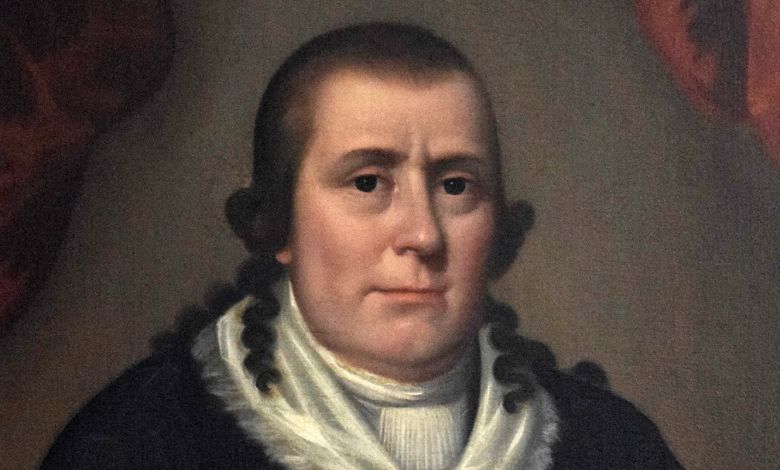
Jemima Wilkinson was the birth name of the American religious leader who became known as the Public Universal Friend. Born into a Quaker family in Rhode Island in 1752, the Friend began preaching after surviving a serious illness in 1776 and claiming that the former identity of Jemima Wilkinson had died.
The Public Universal Friend rejected the birth name and conventional gender identification, preferring to be addressed by the adopted title. The Friend established the Society of Universal Friends, preached repentance and celibacy, and led followers to create a religious community in western New York.
Jemima Wilkinson Profile Summary
| Profile detail | Information |
|---|---|
| Birth name | Jemima Wilkinson |
| Adopted name | Public Universal Friend |
| Role | Religious leader and preacher |
| Date of birth | November 29, 1752 |
| Birthplace | Cumberland, Rhode Island |
| Birth sign | Sagittarius |
| Parents | Amy and Jeremiah Wilkinson |
| Religious background | Quaker upbringing |
| Movement | Society of Universal Friends |
| Ministry began | 1776 |
| Main teachings | Repentance, celibacy, moral discipline, and spiritual devotion |
| Principal settlement | Western New York |
| Date of death | July 1, 1819 |
| Age at death | 66 |
Jemima Wilkinson’s Early Life and Background
Jemima Wilkinson was born on November 29, 1752, in Cumberland, Rhode Island. Wilkinson was the child of Amy and Jeremiah Wilkinson and grew up in a large Quaker family.
The family attended meetings associated with the Smithfield Meeting House. Quaker worship commonly emphasized silence, personal spiritual experience, and the possibility of direct guidance from God.
Wilkinson’s family also had connections to Rhode Island public life. Jeremiah Wilkinson was related to Stephen Hopkins, who served as governor and chief justice of Rhode Island and later signed the Declaration of Independence.
In 1776, Wilkinson became seriously ill during an epidemic. After recovering, Wilkinson declared that Jemima Wilkinson had died and that a spirit sent by God now inhabited the body. From that point forward, the religious leader used the name Public Universal Friend.
The claim of divine transformation was a matter of personal religious belief. Historical accounts can document the claim and the ministry that followed, but they cannot independently verify its supernatural basis.
The Public Universal Friend’s Name and Gender Identity
The Public Universal Friend rejected the name Jemima Wilkinson and did not identify conventionally as either male or female. Followers and others were expected to use the adopted title rather than the birth name.
Historical descriptions indicate that the Friend avoided gendered forms of address and appeared in clothing that contemporaries sometimes interpreted as masculine or androgynous. The Friend’s identity challenged the gender conventions of eighteenth-century American society.
Modern scholars have examined the Public Universal Friend in relation to transgender and nonbinary history. However, applying a definitive contemporary label to an eighteenth-century person can obscure the religious language and historical setting through which the Friend described that identity.
For clarity, this article uses “the Friend” when discussing the religious leader’s life after 1776. The birth name remains relevant because it is widely used in historical and biographical searches.
Jemima Wilkinson’s Relationships and Financial Position
The Public Universal Friend did not marry and preached sexual abstinence. Celibacy formed an important part of the Friend’s religious message, although the Society of Universal Friends also included married adherents.
There is no documented basis for assigning the Friend a modern net worth. Eighteenth- and early nineteenth-century property arrangements cannot be accurately converted into a personal wealth estimate without detailed records and historical analysis.
The Universal Friends community acquired and developed land in western New York. Questions concerning ownership, legal authority, and control of property created disagreements within the settlement. These communal assets should not automatically be treated as the Friend’s personal fortune.
Jemima Wilkinson’s Career and Religious Ministry
The Public Universal Friend’s Early Preaching
The Public Universal Friend began preaching in 1776. The ministry developed during the American Revolutionary era, a period of political upheaval and religious change.
The Friend traveled through Rhode Island, Massachusetts, Connecticut, and Pennsylvania, delivering sermons and attracting followers. The message emphasized repentance, personal discipline, humility, and preparation for divine judgment.
Although the Friend came from a Quaker background, the emerging movement became distinct from established Quaker institutions. Public preaching and the claim of a new divinely appointed identity attracted both committed supporters and skeptical observers.
Jemima Wilkinson and the Society of Universal Friends
The Friend’s followers became known collectively as the Society of Universal Friends. The movement included people from different social and religious backgrounds, with women occupying visible positions in its organization.
The Universal Friends accepted the Friend’s spiritual authority and participated in meetings, travel, and community building. Not every follower rejected an individual birth name or gender identity; those practices were specifically associated with the Public Universal Friend.
Celibacy was strongly encouraged, particularly among devoted members. The movement nevertheless included families and married couples, showing that participation was not limited to unmarried followers.
The Public Universal Friend’s New York Settlement
During the 1780s, the Friend and a group of followers moved toward western New York. They established a settlement in territory that later became part of Yates County.
Community members cleared land, built homes, cultivated farms, and created mills and other facilities. Their settlement represented both a religious project and an example of post-Revolutionary American expansion.
The region was not empty before their arrival. Indigenous peoples had longstanding connections to the land, and accounts of the Universal Friends’ settlement must be understood within the broader history of Native land use, colonial expansion, and contested property claims.
The community participated in regional trade, including exchanges involving Indigenous inhabitants. Broad claims that its members were the first white people to trade with Native communities in the area require careful qualification and supporting historical evidence.
Also Read: Gwen Jones Bio: Age, Birthday, TikTok Content, and Family
Challenges Within the Universal Friends Community
The settlement experienced internal disagreements involving land, leadership, and financial management. Some former supporters challenged the Friend’s authority, while legal disputes complicated property ownership.
Despite these difficulties, the Friend continued preaching and leading the community for several decades. The movement survived beyond its earliest years, although it gradually declined after the Friend’s death.
Jemima Wilkinson’s Beliefs and Teachings
The Public Universal Friend preached within a Christian framework shaped partly by Quaker traditions. Central themes included repentance, moral reform, spiritual discipline, and readiness for divine judgment.
Celibacy and sexual abstinence were prominent teachings. The Friend presented freedom from sexual relationships as a form of spiritual commitment rather than merely a private lifestyle choice.
The movement also emphasized spiritual equality. Women held meaningful responsibilities among the Universal Friends at a time when formal religious leadership was generally dominated by men.
The Friend’s rejection of conventional gender categories was closely connected to the claimed spiritual transformation. It should therefore be examined as both a religious assertion and a challenge to the social expectations of the period.
Jemima Wilkinson’s Major Achievements and Recognition
The Public Universal Friend established one of the earliest independent religious movements led by a person assigned female at birth in the United States. Maintaining authority over a multistate following was unusual within the social structure of the late eighteenth century.
The Friend also helped organize a lasting settlement in western New York. Followers transformed the area through farming, construction, and community development, although this activity occurred within the complicated history of American territorial expansion.
The Public Universal Friend is now studied in several areas of history, including American religion, women’s leadership, communal movements, and gender identity. This continuing scholarship has expanded recognition beyond the movement’s original religious setting.
The Friend did not receive modern professional awards. Historical significance instead rests on the creation of the Society of Universal Friends, decades of public ministry, and resistance to conventional gender and religious roles.
Jemima Wilkinson’s Death and Historical Legacy
The Public Universal Friend died on July 1, 1819, at age 66 in western New York. The Society of Universal Friends continued for a period but weakened without its central leader.
The Friend’s legacy is complex. Some contemporaries regarded the ministry as inspired, while others viewed its claims with hostility or skepticism. Modern historical analysis generally focuses on the movement’s development, community structure, religious ideas, and challenge to established social categories.
The Public Universal Friend remains especially notable for declining to use a birth name or accept a conventional male or female identity. This record has made the Friend an important figure in discussions about the longer history of gender diversity in the United States.
FAQ’s
Who was Jemima Wilkinson?
Jemima Wilkinson was the birth name of the religious leader later known as the Public Universal Friend. After surviving a serious illness in 1776, the Friend began preaching and established the Society of Universal Friends.
Why did Jemima Wilkinson become the Public Universal Friend?
After recovering from illness, Wilkinson claimed that the former identity had died and that God had sent a new spirit to preach. The religious leader then rejected the birth name and adopted the title Public Universal Friend.
What did the Public Universal Friend believe?
The Friend preached repentance, celibacy, moral discipline, humility, and preparation for divine judgment. The teachings developed within a Christian framework influenced by a Quaker upbringing.
Was the Public Universal Friend male or female?
The Friend rejected conventional identification as male or female and avoided gendered forms of address. Historians interpret this identity in different ways, and modern terminology should be used carefully when discussing an eighteenth-century religious figure.
Who followed Jemima Wilkinson?
Followers were known as the Society of Universal Friends. They included men, women, married couples, and celibate adherents who accepted the Friend’s religious authority and helped establish a community in western New York.
When did Jemima Wilkinson die?
The Public Universal Friend died on July 1, 1819, at age 66. The death occurred in western New York, where the Universal Friends had developed their principal settlement.
Conclusion
Jemima Wilkinson was born into a Rhode Island Quaker family on November 29, 1752. Following a severe illness in 1776, the religious leader rejected that birth identity and began preaching as the Public Universal Friend.
The Friend founded the Society of Universal Friends, promoted repentance and celibacy, and led followers to establish a community in western New York. After dying on July 1, 1819, the Friend remained a significant subject in the study of American religion, communal settlement, women’s leadership, and gender history.
Also Read: Jamie Mizrahi Biography: Age, Styling Career, Clients, and Husband
